
What Is Conscious Eating and Why Is It Important?
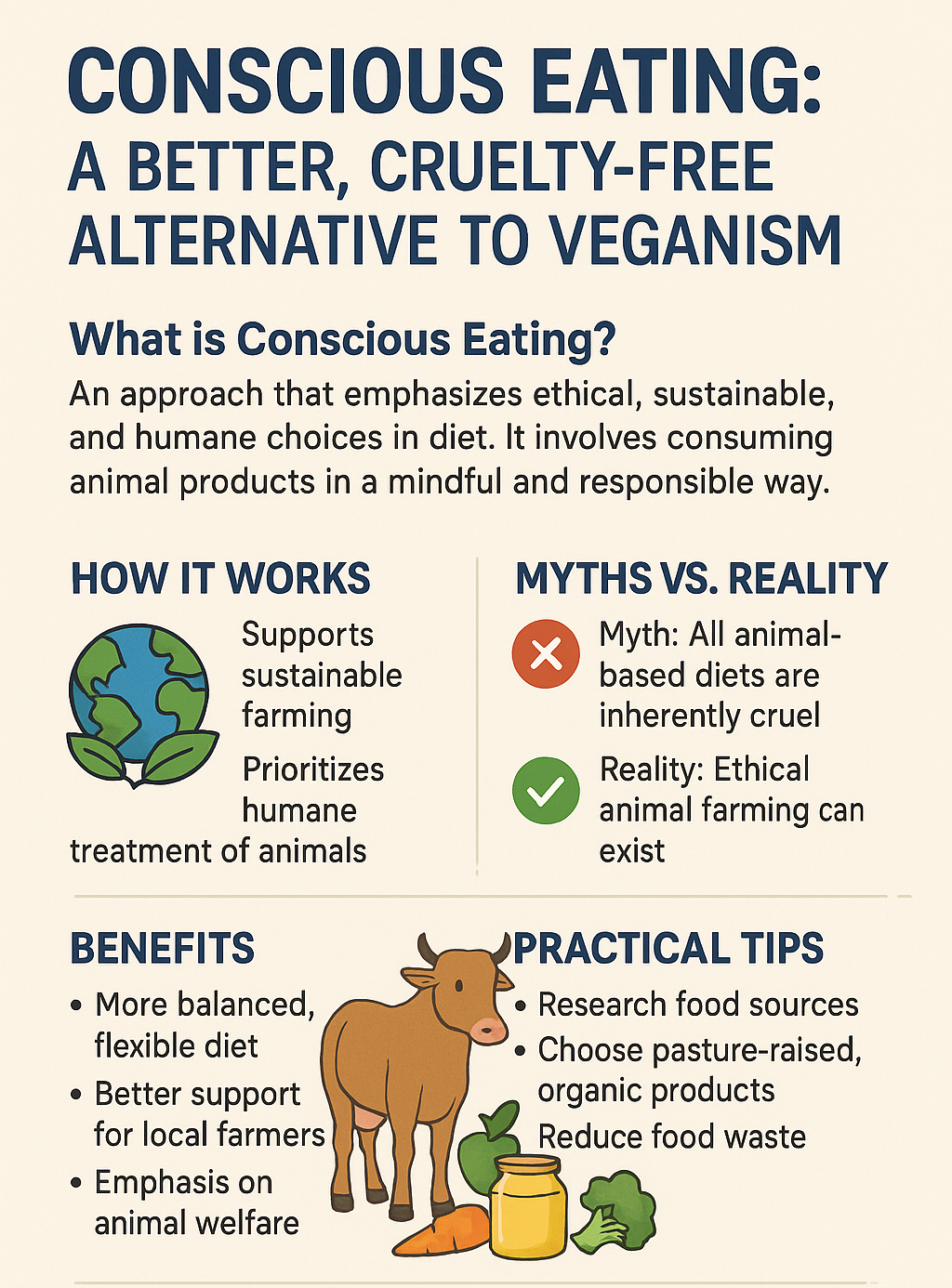
Conscious eating is more than a recent fad – it’s a thoughtful, conscious way we make our food. Unlike strict veganism, which eliminates all animal products, conscious eating encourages ethical, sustainable, and compassionate consumption. It respects both the environment and the sentient beings involved in food production.
This lifestyle acknowledges traditional practices, local wisdom, and natural nutrition. For example, choosing 100% pure desi ghee made from A2 milk using the ancient Bilona method aligns with conscious eating values: nourishment without cruelty, sustainability, and support for local communities.
How Does Conscious Eating Work?
Conscious eating focuses on mindfulness and intentionality. It involves:
Knowing the source: Understanding where your food comes from, who produces it, and how.
Evaluating impact: Considering environmental, ethical, and nutritional aspects.
Honoring balance: Embracing diversity in your plate, including responsibly sourced animal products like Desi Cow Ghee.
Instead of rigid restrictions, conscious eating allows for flexibility based on ethics, health, and tradition. Products like Gir cow’s A2 Bilona ghee are considered ethical because they come from indigenous cows treated with care and reverence.
Common Myths About Conscious Eating
- It’s just like veganism
Not quite. Conscious eating includes high-welfare animal products like A2 ghee, which are both cruelty-free and highly nutritious.
- It’s expensive
While some organic or artisan foods cost more, conscious eating values quality over quantity, reducing waste and long-term health costs.
- It’s not environmentally friendly
On the contrary, small-scale, traditional food systems (like bilona ghee production) can be more sustainable than monocrop agriculture used in vegan diets.
What Are the Benefits of Conscious Eating?
- Ethical living: Supports cruelty-free, humane farming practices.
- Nutritional excellence: Products like Desi Cow Ghee are rich in Vitamins A, D, E, and Omega-3s.
- Boosts immunity and digestion: Especially when using ghee made using traditional bilona methods.
- Supports local economies: Encourages farm-to-table supply chains and indigenous breeds.
- Balanced sustainability: Reduces carbon footprint by avoiding highly processed or imported vegan alternatives.
How Can You Practice Conscious Eating?
Here’s a simple step-by-step guide to help you begin:
- Read labels and research brands
Choose companies like TheCowStory that practice ethical sourcing and traditional methods. - Prioritize traditional wisdom
Include A2 ghee, soaked grains, seasonal vegetables, and fermented foods in your diet. - Buy local, eat seasonal
Support farmers markets and native food systems. - Cook mindfully
Slow down, savor your food, and avoid ultra-processed meals. - Avoid food wastage
Buy only what you need and reuse leftovers creatively.
What Are the Challenges or Mistakes to Avoid?
- Overconsumption of “healthy” items: Just because something is ethically sourced doesn’t mean it should be consumed in excess.
- Misinformation: Not all “organic” or “natural” labels mean cruelty-free.
- Guilt-driven choices: Make informed, joyful decisions rather than fear-based restrictions.
Frequently Asked Questions (FAQs)
- Is conscious eating better than veganism?
For many, yes. It offers a more balanced, flexible, and culturally rooted approach to ethical eating.
- Can I consume dairy on a conscious diet?
Yes, especially if it comes from humanely treated cows like Gir cows and is processed using traditional methods.
- What is Bilona Ghee and why is it special?
It’s handcrafted ghee made from curd churned from A2 milk, retaining nutrients and offering superior health benefits.
- Is Desi Cow Ghee ethical?
When sourced from brands like TheCowStory, which practice humane care for cows, yes.
- How does this diet impact the planet?
It promotes sustainable agriculture, supports biodiversity, and often has a smaller environmental footprint.
What Are the Benefits of Conscious Eating?
- Ethical living: Supports cruelty-free, humane farming practices.
- Nutritional excellence: Products like Desi Cow Ghee are rich in Vitamins A, D, E, and Omega-3s.
- Boosts immunity and digestion: Especially when using ghee made using traditional bilona methods.
- Supports local economies: Encourages farm-to-table supply chains and indigenous breeds.
- Balanced sustainability: Reduces carbon footprint by avoiding highly processed or imported vegan alternatives.
How Can You Practice Conscious Eating?
Here’s a simple step-by-step guide to help you begin:
- Read labels and research brands
Choose companies like TheCowStory that practice ethical sourcing and traditional methods. - Prioritize traditional wisdom
Include A2 ghee, soaked grains, seasonal vegetables, and fermented foods in your diet. - Buy local, eat seasonal
Support farmers markets and native food systems. - Cook mindfully
Slow down, savor your food, and avoid ultra-processed meals. - Avoid food wastage
Buy only what you need and reuse leftovers creatively.
What Are the Challenges or Mistakes to Avoid?
- Overconsumption of “healthy” items: Just because something is ethically sourced doesn’t mean it should be consumed in excess.
- Misinformation: Not all “organic” or “natural” labels mean cruelty-free.
- Guilt-driven choices: Make informed, joyful decisions rather than fear-based restrictions.
Frequently Asked Questions (FAQs)
- Is conscious eating better than veganism?
For many, yes. It offers a more balanced, flexible, and culturally rooted approach to ethical eating.
- Can I consume dairy on a conscious diet?
Yes, especially if it comes from humanely treated cows like Gir cows and is processed using traditional methods.
- What is Bilona Ghee and why is it special?
It’s handcrafted ghee made from curd churned from A2 milk, retaining nutrients and offering superior health benefits.
- Is Desi Cow Ghee ethical?
When sourced from brands like TheCowStory, which practice humane care for cows, yes.
- How does this diet impact the planet?
It promotes sustainable agriculture, supports biodiversity, and often has a smaller environmental footprint.
